
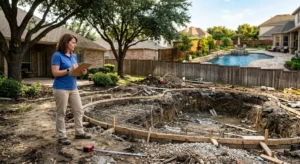
DFW Custom Pools Pricing: What North Texas Homeowners Actually Pay in 2026
Updated for 2026 | Dallas-Fort Worth Pool Pricing Guide
The average custom pool in the Dallas-Fort Worth area costs between $50,000 and $150,000 — but most homeowners have no idea what drives that $100,000 gap. They get a quote, feel a wave of sticker shock, and either abandon the dream or sign a contract without fully understanding what they’re paying for. Neither outcome is good.
If you’re a North Texas homeowner who’s been researching pool costs, you’ve probably run into a frustrating mix of vague estimates, national averages that don’t apply to DFW, and builder websites that won’t give you a number without a consultation. This guide is different. We’re going to break down exactly what goes into DFW custom pool pricing, what makes North Texas unique, and how to budget realistically so you can make a confident, informed decision.
Whether you’re dreaming of a modest backyard retreat or a full resort-style oasis, the numbers here are real — pulled from actual DFW market conditions in 2026.
Key Takeaways
- Custom pools in DFW range from $50,000 to $150,000+, with most mid-range builds landing between $70K–$120K
- North Texas soil, climate, and water chemistry create unique cost factors not reflected in national averages
- Pool size, shape, materials, and features are the biggest price drivers — not builder markup
- Always budget a 10–15% contingency buffer above your quoted price for unexpected site conditions
- Premium features like saltwater systems, automation, and spa integration add $10K–$50K but significantly increase enjoyment and home value
- Off-season construction (fall/winter) can save 10–20% on your total project cost
- Pools in DFW typically add 5–10% to home resale value, making them a genuine long-term investment
Understanding DFW Custom Pool Pricing: The Real Numbers
Let’s start with the honest truth: custom pool pricing in Dallas-Fort Worth is not cheap, and anyone who tells you otherwise is either selling you something or hasn’t built a pool in North Texas recently. But here’s the equally honest truth — when you understand what you’re actually paying for, the investment makes complete sense.
The broad range — $50,000 to $150,000 — reflects the enormous variety in what a “custom pool” can mean. A basic 12×24 rectangular pool with standard plaster finish and essential equipment sits at the lower end. A 20×40 resort-style pool with a spa, waterfall features, full automation, premium tile work, and integrated outdoor living space pushes well past $150,000. Most DFW homeowners end up somewhere in the middle, typically investing between $70,000 and $120,000 for a well-appointed custom pool that genuinely transforms their backyard.
What drives the price within that range? Four main factors: size and shape, materials and finishes, features and equipment, and site-specific conditions. We’ll break each of these down in detail throughout this guide. But first, it’s worth understanding why custom pool design services in North Texas carry a different price tag than what you might see quoted in national cost guides.
Why DFW Pool Pricing Differs from National Averages
National averages for custom pool installation hover around $35,000–$65,000. If you’ve seen those numbers and are wondering why your DFW quotes are coming in higher, here’s what those averages miss:
Texas heat and sun exposure are not minor considerations. With summer temperatures regularly hitting 100°F or higher, pools in DFW need materials and equipment rated for extreme UV exposure and thermal stress. Cheaper materials that work fine in milder climates deteriorate quickly under North Texas sun. Builders who know the market spec accordingly — and that costs more upfront.
Labor costs in the DFW market reflect the region’s economic reality. The Dallas-Fort Worth Metroplex is one of the fastest-growing major metros in the country, with a construction labor market to match. Experienced, licensed pool builders are in high demand, and their rates reflect that. You’re competing with residential construction, commercial development, and infrastructure projects for the same skilled tradespeople.
Soil composition is a factor many homeowners don’t think about until excavation begins. Large portions of DFW sit on expansive clay soil — the same stuff that causes foundations to shift and sidewalks to crack. This clay-heavy soil complicates excavation, requires more sophisticated drainage planning, and can add meaningful costs to the structural work beneath your pool. We’ll cover this more in the North Texas-specific section below.
Why DFW Pool Pricing Feels High
North Texas homeowners often compare prices to national averages and feel sticker shock. The reality: DFW’s booming real estate market, specialized expertise needed for local soil and climate conditions, and high-quality builder availability all contribute to premium pricing. You’re not overpaying — you’re investing in expertise that protects a $70,000–$150,000 asset for decades. A builder who doesn’t understand DFW’s specific challenges can create problems that cost far more to fix than the savings you thought you were getting.
Breaking Down Custom Pool Costs: What You’re Actually Paying For
One of the most empowering things you can do as a homeowner going into a pool project is understand the cost components. When you know what each dollar is buying, you can make smarter decisions about where to invest and where to economize. Here’s how a typical custom pool budget breaks down:
- Excavation and site preparation (10–15% of total cost): Digging the hole, hauling away soil, and preparing the site. In DFW, clay soil and underground utilities can push this toward the higher end.
- Pool shell and structural materials (25–35% of total cost): The concrete, rebar, and gunite or shotcrete that form the actual pool structure. This is the backbone of your investment.
- Plumbing, electrical, and equipment (20–25% of total cost): Pumps, filters, heaters, pipes, conduit, and the mechanical systems that make your pool function. Quality here matters enormously for long-term performance.
- Finishing, decking, and landscaping (20–30% of total cost): The interior surface finish, coping, decking material, and surrounding landscaping. This is where your pool goes from functional to beautiful.
- Permits, inspections, and contingencies (5–10% of total cost): Required by all DFW municipalities, permit costs vary but are non-negotiable. Always include a contingency line item.
Understanding the pool construction process from excavation through final inspection helps you see why each phase carries real cost. This isn’t padding — it’s the actual work required to build something that will last 20–30+ years in one of the harshest climates in the country.
Material Choices and Their Impact on Price
The material decisions you make will ripple through your budget in significant ways. Here’s what you need to know:
Pool construction type: Concrete (gunite or shotcrete) pools are the gold standard in DFW and the most common choice for custom builds. They’re fully customizable in shape and depth, extremely durable, and handle North Texas soil movement better than alternatives. Fiberglass pools are faster to install and lower maintenance, but come in limited shapes and sizes. Vinyl liner pools are the most affordable option but require liner replacement every 7–10 years and aren’t ideal for DFW’s extreme temperatures.
Interior finish: This is where you’ll see significant price variation. Standard white plaster is the most economical choice at roughly $5,000–$8,000 for a mid-size pool. Aggregate finishes (pebble, quartz, or glass bead blends) run $8,000–$15,000 and offer better durability and aesthetics. Premium glass tile finishes can reach $20,000–$25,000 or more but create a stunning visual effect and last significantly longer. For DFW’s hard, mineral-rich water, aggregate finishes offer an excellent balance of durability and cost.
Equipment quality: The pump, filter, and heater you choose affect both your upfront cost and your monthly operating expenses for years to come. Budget equipment may save $1,500–$3,000 at installation but can cost more in energy and repairs over time. Variable-speed pumps, for example, cost $800–$1,500 more than single-speed pumps but can reduce your electricity costs by 50–75% — a difference that pays for itself within a few years in DFW’s long swim season.
Labor Costs in the DFW Market
Labor typically represents 30–40% of a custom pool’s total cost in the DFW market. Skilled pool builders — the ones who understand North Texas soil, local building codes, and how to build a pool that will still look great in 15 years — command premium rates. This is appropriate. You’re paying for expertise that protects your investment.
Timeline also affects labor costs. A standard custom pool takes 8–14 weeks to complete in DFW. If you need an accelerated timeline — say, you want the pool ready for a summer event — expect to pay a premium for prioritized scheduling and potentially overtime work. Conversely, flexible timing (especially off-season construction) can create opportunities for better pricing when builders have more availability.
Design complexity is directly proportional to labor hours. A freeform pool with multiple depth zones, a beach entry, a grotto, and a waterfall feature requires significantly more skilled labor than a straightforward rectangular pool. Every curve, every transition, every custom feature adds hours to the project. That’s not a complaint — it’s just the reality of what custom means.
Pool Size and Shape: How Dimensions Drive DFW Pool Pricing
Size is the single most straightforward driver of pool cost. More water volume means more excavation, more structural material, more plumbing, more equipment capacity, and more finishing work. Here’s a realistic breakdown of what different pool sizes cost in the DFW market in 2026:
- Small pools (12×24, approximately 288 sq ft): $40,000–$60,000. These are practical, efficient options for smaller lots or homeowners focused on functionality over showmanship. A well-designed small pool can still be beautiful and highly enjoyable.
- Medium pools (15×30, approximately 450 sq ft): $60,000–$100,000. The sweet spot for most DFW families. This size accommodates lap swimming, family play, and entertaining without dominating the backyard.
- Large pools (20×40+, approximately 800+ sq ft): $100,000–$200,000+. These are statement pools — the kind you see in luxury neighborhoods and resort-style backyards. At this size, you have room for dedicated swim lanes, a tanning ledge, a spa, and dramatic water features.
Shape matters as much as size. A rectangular pool of any given square footage is the most cost-efficient design because it minimizes waste in excavation and maximizes the efficiency of the structural work. Custom shapes — kidney, freeform, L-shaped, lagoon-style — add a 15–30% premium over a comparable rectangular pool. That premium buys you a pool that looks like it was designed specifically for your backyard rather than dropped in from a catalog. For many homeowners, that’s worth every dollar.
Depth variations also add cost. A pool with a consistent 5-foot depth throughout is simpler and less expensive to build than one with a shallow tanning ledge, a 3.5-foot play zone, and a deep end that drops to 8 feet. Each transition requires additional structural engineering and finishing work. If you want multiple zones — and many DFW families do, because they serve different ages and activities — plan for the added cost accordingly.
If you’re not sure what size and shape would work best for your specific lot and lifestyle, exploring custom pool design options with a professional is the best way to get clarity. A good designer can show you how different configurations fit your space and budget before a single shovel hits the ground.
Wondering What Size Pool Fits Your North Texas Backyard?
If you’re trying to figure out what size and style would work best for your North Texas home, that’s exactly what a professional consultation is designed to answer. See what’s possible for your specific lot and budget.
Premium Features That Impact Your DFW Pool Investment
Here’s where pool projects can really take off — in both cost and enjoyment. Premium features are the difference between a pool you swim in and a backyard experience you live in. Understanding what each feature costs helps you prioritize what matters most to your family.
- Saltwater systems ($3,000–$8,000 additional): Instead of adding chlorine directly, saltwater systems generate chlorine from dissolved salt. The water feels softer on skin and eyes, and you’ll spend significantly less on chemicals over time. For DFW homeowners who plan to swim frequently, this is one of the most popular upgrades.
- Heating systems ($2,000–$6,000 depending on type): Gas heaters heat water fastest and are ideal for occasional use. Heat pumps are more energy-efficient for regular use. Solar heating systems leverage DFW’s abundant sunshine and have the lowest operating costs once installed. In North Texas, a heater extends your swim season by 2–3 months on either end — a significant quality-of-life upgrade.
- Automation and smart controls ($2,000–$10,000 for full integration): Modern pool automation lets you control lighting, temperature, jets, and water features from your smartphone. Entry-level systems start around $2,000; full integration with voice control, scheduling, and remote monitoring can reach $10,000. For busy DFW families, automation isn’t a luxury — it’s a convenience that makes pool ownership genuinely easier.
- Lighting and water features ($3,000–$15,000): LED color-changing lights, waterfalls, deck jets, bubblers, and grottos transform the visual experience of your pool. A basic LED lighting package starts around $3,000; elaborate water features with multiple elements can reach $15,000 or more. These features are especially impactful in DFW, where evening pool use is common during the long, hot summers.
- Spa or hot tub integration ($5,000–$20,000 additional): An attached spa shares plumbing and equipment with the pool, making it more cost-effective than a standalone hot tub. The cost varies based on size, features, and how it’s integrated into the overall design. A spa adds year-round utility to your pool investment — particularly valuable during DFW’s mild winters.
You can also explore how these features integrate with broader outdoor living spaces — pergolas, outdoor kitchens, fire features, and landscaping — to create a complete backyard transformation. Many DFW homeowners find that the pool becomes the anchor for a larger outdoor living investment that dramatically increases how they use and enjoy their property.
Energy-Efficient Options for North Texas Climate
DFW gets approximately 234 sunny days per year — significantly more than the national average. That sunshine is an asset when it comes to pool energy costs, if you plan for it. Solar heating systems are genuinely practical in North Texas in a way they aren’t in cloudier climates. A solar heating system adds $3,000–$6,000 to your project but can virtually eliminate heating costs for most of the year.
Variable-speed pumps are another smart investment for DFW homeowners. Traditional single-speed pumps run at full power whenever they’re on. Variable-speed pumps adjust their speed to match actual demand, reducing electricity consumption by 50–75%. Given that pool pumps run year-round in DFW’s climate, the energy savings are substantial — often $500–$1,000 per year. Most variable-speed pumps pay for their premium cost within 2–3 years.
Automated pool covers serve double duty in DFW: they reduce evaporation (which is significant in the Texas heat), retain heat overnight, and keep debris out of the pool. A quality automatic cover system adds $3,000–$8,000 but reduces chemical use, heating costs, and cleaning time meaningfully over the life of the pool.
Understanding Saltwater vs. Chlorine Costs
Saltwater systems cost $3,000–$8,000 more upfront but save $300–$500 annually on chemicals. Over 10 years, saltwater becomes the more economical choice for most DFW homeowners — and that’s before accounting for the softer feel of the water and reduced irritation to skin and eyes. The salt cell (the component that generates chlorine) will need replacement every 3–5 years at a cost of $500–$800, but overall the economics strongly favor saltwater for regular swimmers.
Factors Unique to North Texas That Affect Pool Pricing
If you’ve gotten quotes from builders who don’t specialize in the DFW market and wondered why local quotes come in higher, this section explains why. North Texas has a specific set of environmental and regulatory conditions that affect every pool project — and builders who understand them are worth their premium.
Alkaline, mineral-rich water: DFW’s municipal water supply is notably hard — high in calcium, magnesium, and other minerals. This affects your pool chemistry in ways that require more sophisticated filtration and water treatment. Without proper planning, hard water causes calcium scaling on surfaces and equipment, reducing both aesthetics and lifespan. Experienced North Texas pool builders spec equipment and finishes specifically to handle local water chemistry.
Extreme summer heat: When temperatures regularly hit 100°F or above, pool water evaporates quickly, chemical balance shifts rapidly, and equipment works harder. This isn’t just a maintenance issue — it affects material selection during construction. UV-resistant finishes, heat-tolerant equipment, and proper shade planning are all considerations that add cost but protect your investment over the long term.
Clay-heavy soil: Expansive clay soil is present throughout much of the DFW Metroplex — particularly in the Dallas and Fort Worth areas. This soil expands when wet and contracts when dry, creating movement that can stress pool structures. Proper engineering, including reinforced gunite applications and appropriate drainage systems, is essential. Builders who cut corners on structural planning in DFW clay soil create pools that crack and shift within years. The additional engineering cost is real, but so is the protection it provides.
Freeze-thaw cycles: While DFW doesn’t experience the severe winters of northern states, it does get periodic hard freezes — and they’ve been getting more dramatic in recent years (as anyone who lived through the 2021 freeze knows). Proper pool design in North Texas includes freeze protection systems that automatically activate when temperatures drop, protecting plumbing and equipment from damage. This adds cost but is genuinely necessary in the DFW climate.
Local building codes and permit requirements: Every city and municipality in the DFW area has its own specific requirements for pool construction — setback distances, fence and barrier requirements, electrical standards, and inspection protocols. Navigating these requirements efficiently requires local knowledge. A builder unfamiliar with your specific municipality’s requirements can cause costly delays and rework.
Comparing Budget, Mid-Range, and Premium Pool Investments in DFW
One of the most helpful things you can do at the start of your pool planning process is honestly identify which budget tier fits your situation. Not because higher is always better, but because understanding what you get at each level helps you set realistic expectations and make decisions you’ll be happy with for years.
Budget pools ($40,000–$70,000): At this level, you’re looking at a basic rectangular or simple freeform design, standard plaster or basic aggregate finish, essential equipment (single-speed pump, standard filter, basic lighting), and minimal decking. These pools are functional and enjoyable — don’t let the word “budget” diminish that. A well-built $55,000 pool from a reputable DFW builder is a genuinely great backyard addition. What you’re trading is customization and premium features, not quality of construction.
Mid-range pools ($70,000–$120,000): This is where most DFW custom pool projects land, and for good reason. At this investment level, you can afford a custom shape, upgraded aggregate or pebble finish, a heating system, basic automation, LED lighting, and quality decking. You might add a modest water feature or a tanning ledge. The result is a pool that feels genuinely custom and delivers a significantly elevated backyard experience compared to a budget build.
Premium pools ($120,000–$200,000+): At the premium level, you’re building a statement. Complex freeform designs, luxury glass tile finishes, full automation with smartphone control, integrated spa, dramatic water features, premium LED lighting, high-end decking materials, and professional landscaping all become possible. These pools don’t just add value to your home — they transform how you live in it. Many DFW homeowners who invest at this level report that their backyard becomes the center of their social life.
To get a real sense of what these investment levels look like in practice, reviewing a builder’s completed pool portfolio is one of the best research steps you can take. Seeing actual finished projects at different price points makes the abstract numbers very concrete.
What’s Included vs. What Costs Extra
This is one of the most common sources of confusion and frustration in the pool buying process. Two quotes that look similar on paper can be dramatically different in what they actually include. Here’s what to watch for:
Typically included in standard quotes: Pool shell and structure, basic plumbing and electrical, standard equipment (pump, filter, basic lighting), and pool interior finish. Some builders include a basic concrete deck; many don’t.
Frequently quoted separately: Decking beyond basic concrete, landscaping, permits and inspection fees, heating systems, automation upgrades, water features, spa integration, fencing (required by code in most DFW municipalities), and initial chemical startup. These line items can add $15,000–$40,000 to a project that looked affordable at first glance.
Always ask specifically about: Permit costs, fence requirements, landscaping restoration after construction, and first-year maintenance equipment. A transparent builder will walk you through every line item before you sign anything.
Ready to See What’s Possible Within Your Budget?
Professional pool builders in DFW can walk you through exactly what each investment level includes — no surprises, no hidden costs. Get a clear picture of your options before you commit to anything.
Hidden Costs and Contingencies Every DFW Homeowner Should Know
Let’s talk about the part of pool pricing that no one likes to discuss but every homeowner needs to understand: the unexpected costs. Even the most thorough quote from the most experienced builder can encounter surprises once excavation begins. This isn’t a sign of bad planning — it’s the reality of construction in a complex urban environment like DFW.
Site preparation surprises are the most common source of cost overruns. Underground utilities that aren’t on any map, rock formations that require specialized equipment to break through, poor drainage conditions that require engineered solutions, and unexpected soil instability can all add thousands to your project. In DFW’s older neighborhoods especially, underground infrastructure can be unpredictable.
Permit delays and additional inspection fees are a reality in the DFW market. Different municipalities have different processing timelines, and some require multiple inspections at different construction phases. Delays can affect your project timeline and, in some cases, your labor costs if crews need to be rescheduled.
Soil testing and engineering reports cost $500–$2,000 but are sometimes required before construction can begin — particularly in areas with known soil instability or in flood-zone adjacent properties. Some builders include this in their quote; many don’t. Ask specifically.
Unexpected structural reinforcement needs arise when soil conditions during excavation reveal problems that weren’t apparent during initial site assessment. Additional rebar, thicker gunite applications, or engineered drainage solutions can add $3,000–$10,000 to a project. This is not optional — it’s the difference between a pool that lasts 30 years and one that develops structural problems in 10.
The bottom line on contingencies: Always plan for 10–15% above your quoted price. On a $90,000 pool, that means keeping $9,000–$13,500 in reserve. This isn’t pessimism — it’s smart financial planning. Most projects don’t use the full contingency, but having it available means you can handle surprises without stress.
Pro Tip: The 10–15% Contingency Rule
Always add 10–15% to your quoted price as a contingency buffer. DFW’s clay soil and underground utilities often reveal surprises during excavation that no one could have predicted from a surface assessment. Smart budgeting means planning for the unexpected — and if you don’t need it, you’ll have a nice cushion for upgraded landscaping or patio furniture instead.
Financing Your DFW Custom Pool: Making the Investment Work
For most North Texas homeowners, a custom pool is a significant financial decision — one that deserves as much thought as any other major home investment. The good news is that there are multiple financing pathways available, and DFW’s strong real estate market means you’re making an investment that holds its value well.
Home equity loans and lines of credit (HELOC) are the most common financing method for pool projects. If you’ve built equity in your DFW home — which is likely given the region’s strong appreciation over the past decade — you can borrow against that equity at rates typically lower than personal loans or credit cards. Interest may be tax-deductible in some circumstances (consult your tax advisor). A HELOC gives you flexibility to draw funds as needed during construction, which aligns well with the progress payment structure most builders use.
Pool financing through builders or third-party lenders offers another option, typically with 5–10 year terms. Rates vary based on creditworthiness and current market conditions. Some builders have preferred lending relationships that offer competitive rates and streamlined approval. Ask about this option when you’re getting quotes — it can simplify the financing process considerably. You can also explore pool financing options to understand what’s available before your first builder meeting.
Payment structure during construction typically follows a progress-based model: a deposit at contract signing (usually 10–20%), payments at key construction milestones (excavation complete, shell complete, equipment installed), and a final payment at project completion. This structure protects both you and the builder and ensures you’re not paying for work that hasn’t happened yet.
Return on investment: Pools in the DFW market add approximately 5–10% to home resale value, according to real estate professionals familiar with the market. On a $400,000 home, that’s $20,000–$40,000 in added value — not a full return on a $100,000 pool investment, but a meaningful offset. More importantly, the lifestyle value of having a pool in North Texas — where outdoor living is possible for 8–9 months of the year — is genuinely significant. Many DFW homeowners report that their pool becomes the most-used feature of their home.
Long-term cost of ownership: Budget $1,500–$3,000 annually for ongoing pool maintenance, including chemicals, professional cleaning, equipment maintenance, and minor repairs. Saltwater pools trend toward the lower end of this range; pools with heating systems and complex water features trend higher. This is a real cost that should factor into your total investment calculation.
Red Flag: Quotes That Seem Too Good to Be True
If a DFW pool quote is significantly lower than comparable quotes from other builders, ask detailed questions about what’s excluded. Suspiciously low bids often mean hidden costs that appear later, inexperienced contractors who underestimate the work involved, or corners being cut on materials and engineering. A pool is a 20–30 year investment — saving $10,000 upfront by going with an underqualified builder can cost $30,000 or more in repairs and problems down the road.
Getting Accurate Quotes: What to Ask DFW Pool Builders
Armed with everything you’ve learned so far, you’re in a much stronger position to evaluate quotes intelligently. Here’s what to ask every builder you meet with:
Request itemized quotes. A single lump-sum number tells you almost nothing. You want to see excavation, structural work, plumbing, electrical, equipment, finishes, decking, permits, and any other line items broken out separately. This makes quotes comparable and reveals what’s included and what’s not.
Ask about warranty coverage. What’s covered, for how long, and what’s the process for warranty claims? A reputable builder will have clear, written warranty terms covering both workmanship and equipment. Be specific: Does the warranty cover the pool shell? The equipment? The finish? For how many years?
Clarify the timeline and payment schedule. How long will construction take? What are the payment milestones? What happens if construction is delayed? Understanding the timeline helps you plan your life around the project and ensures you’re not making large payments before corresponding work is complete.
Verify contractor licensing and insurance. In Texas, pool builders must be licensed by the Texas Department of Licensing and Regulation (TDLR). Ask for the license number and verify it. Also confirm that the builder carries both general liability insurance and workers’ compensation coverage. This protects you from liability if something goes wrong on your property.
Request references from recent DFW projects. Not references from three years ago — recent ones. The pool industry has experienced significant workforce changes in recent years, and a builder’s current team and processes matter. Ask specifically for references from projects similar to yours in size and complexity. And actually call them.
Working with experienced DFW pool contractors who are transparent about their process, pricing, and credentials makes the entire experience better — from the first consultation through the final inspection. Don’t settle for vague answers to direct questions.
Ready to Start Getting Accurate Quotes?
When you’re ready to connect with experienced DFW pool builders who will give you transparent, itemized pricing, having the right questions makes all the difference. Start the conversation with a team that knows North Texas.
Real Examples: DFW Custom Pool Pricing in Action
Abstract numbers only go so far. Here are three realistic scenarios that represent what North Texas homeowners are actually building and spending in 2026. These aren’t cherry-picked outliers — they’re representative of the kinds of projects that happen every day across the DFW Metroplex.
Scenario 1: 15×30 saltwater pool in Plano — $85,000–$95,000
A family in Plano with a mid-size backyard wants a pool they can swim in and entertain around. They choose a freeform 15×30 design with a tanning ledge, aggregate pebble finish, saltwater system, variable-speed pump, LED lighting, and a modest concrete deck. Permits and inspections are included. The result: a beautiful, functional pool that the whole family uses constantly from April through October. The saltwater system keeps maintenance manageable, and the variable-speed pump keeps monthly electricity costs reasonable. This is a very typical mid-range DFW pool project.
Scenario 2: 20×40 resort-style pool in Dallas with spa and automation — $150,000–$180,000
A couple in North Dallas wants to create a true backyard resort. Their 20×40 freeform pool features a beach entry, a raised spa with spillover, a grotto with waterfall, glass tile accents, full LED color-changing lighting, complete automation with smartphone control, a gas heater, and premium travertine decking. Professional landscaping completes the transformation. This pool becomes the center of their social life — they host gatherings regularly and use the spa year-round. The investment is significant, but so is the lifestyle transformation.
Scenario 3: 12×24 budget-friendly pool in Fort Worth — $50,000–$65,000
A young family in Fort Worth wants a pool for the kids but has a tighter budget. They choose a simple rectangular 12×24 design with standard plaster finish, essential equipment, basic LED lighting, and a practical concrete deck. No spa, no automation, no water features — just a clean, well-built pool that the kids will live in all summer. The builder is reputable, the construction is solid, and the family has exactly what they wanted at a price that worked for their budget. Three years later, they’re still thrilled with the decision.
What these scenarios illustrate is that your neighborhood, lot size, and specific site conditions also matter. A pool in a high-value neighborhood with a large, flat lot and easy access will cost differently than the same pool on a sloped lot with limited access in an older neighborhood with complex underground utilities. Your specific situation is unique, and that’s why professional site assessments matter before any pricing becomes final.
DFW-Specific Advantage: Off-Season Construction
Building your pool in fall or winter (September through February) can save 10–20% compared to peak season. Contractors have more availability, material lead times are shorter, and you’ll be ready to enjoy your pool the moment summer arrives. Many DFW homeowners who’ve done this say it’s one of the smartest decisions they made in the whole process. The mild North Texas winters make off-season construction entirely practical.
Maximizing Value: Tips for Getting the Best Price on Your DFW Custom Pool
Getting the best value on your pool investment isn’t about finding the cheapest contractor — it’s about making smart decisions that maximize what you get for every dollar you spend. Here’s what experienced DFW pool owners wish they’d known going in:
Get multiple quotes from reputable builders. Three quotes is the standard recommendation, and it’s good advice. But make sure you’re comparing comparable scopes of work — an itemized quote from one builder and a lump-sum quote from another aren’t comparable. Ask all builders to quote the same specifications so you can make a genuine apples-to-apples comparison.
Consider off-season construction. As noted above, fall and winter construction in DFW can yield meaningful savings — 10–20% is realistic when builders have more availability and are competing for projects. If your timeline is flexible, this is one of the most straightforward ways to reduce your total cost.
Prioritize features that matter most to your family. It’s easy to keep adding features during the design process — and each one sounds great in isolation. But be disciplined about what will actually get used. A spa that gets used three times a year is a worse investment than a high-quality variable-speed pump that saves you money every month for 15 years. Think about your actual lifestyle, not the idealized version of it.
Plan for phased construction if budget is tight. Some features can be added later — automation systems, water features, outdoor lighting, and landscaping can all be phased in after the core pool is complete. This approach lets you build the pool now and enhance it over time as budget allows. Discuss this with your builder upfront so the infrastructure (conduit runs, plumbing stubs) is installed during initial construction, making future additions much less expensive.
Invest in quality equipment from the start. This is not the place to economize. Variable-speed pumps, quality filters, and durable interior finishes cost more upfront but significantly reduce your long-term maintenance and operating costs. Cheap equipment that needs replacement in 5 years costs more over time than quality equipment that runs reliably for 15+ years. Your builder should be able to show you the long-term cost analysis for different equipment choices.
You can also look at how your pool integrates with a broader outdoor living design — sometimes combining a pool project with decking, pergola, and outdoor kitchen work allows for efficiencies that reduce the overall cost compared to doing each project separately.
Planning Your DFW Custom Pool Budget: A Practical Checklist
Before you sit down with a pool builder, work through this checklist. It will help you walk into that conversation with clarity — and it will make the builder’s job easier, which often translates to a better outcome for you.
- Determine your total budget range and financing method. Know your number before you start getting quotes. Decide whether you’re paying cash, using a HELOC, or pursuing builder financing. Having your financing lined up before you start the quote process puts you in a stronger position and speeds up the decision-making timeline.
- List must-have features vs. nice-to-have features. Write these down. Must-haves are non-negotiable — they define your minimum acceptable pool. Nice-to-haves are things you’d love but could live without if budget requires. This distinction will be invaluable when you’re reviewing quotes and making trade-off decisions.
- Account for site preparation and contingencies. Add 10–15% to your target budget as a contingency reserve. If your target pool cost is $90,000, make sure you have access to $100,000–$103,500 in total. This isn’t pessimism — it’s financial wisdom.
- Plan for permits, inspections, and professional fees. These costs are real and non-optional. Budget $1,500–$5,000 for permits depending on your municipality. Ask builders whether these are included in their quote or separate.
- Budget for first-year maintenance and equipment. Your first year of pool ownership will involve some learning curve costs — getting your water chemistry dialed in, purchasing maintenance equipment (pole, brush, vacuum, test kit), and potentially hiring a professional service to establish a maintenance routine. Budget $500–$1,500 for first-year startup costs beyond the pool itself.
- Consider the full outdoor transformation. Think about what you want the area around your pool to look like. Decking, landscaping, fencing, outdoor furniture, and lighting all contribute to the finished experience. If these are important to you, factor them into your total budget from the start rather than being surprised by them later.
If you’d like to see how other DFW homeowners have navigated this process, reading through real homeowner experiences can give you a sense of what the journey looks like from start to finish. There’s something reassuring about hearing from people who’ve been exactly where you are right now.
“The homeowners who have the best pool-building experiences are the ones who came prepared — they knew their budget, they knew their priorities, and they asked the right questions. That preparation doesn’t just save money; it makes the whole process smoother and more enjoyable for everyone involved.”
Frequently Asked Questions About DFW Custom Pool Pricing
What’s the average cost of a custom pool in Dallas-Fort Worth?
The average custom pool in DFW ranges from $50,000 to $150,000, depending on size, materials, and features. Most mid-range custom pools in the Dallas-Fort Worth area fall between $70,000 and $120,000, which is where the majority of residential projects land. Your specific cost depends on your lot size, soil conditions, desired features, and design complexity — which is why getting a site-specific quote from a reputable local builder is always more useful than relying on general averages.
Why is DFW pool pricing higher than national averages?
North Texas has unique challenges including alkaline mineral-rich water, extreme summer heat that regularly exceeds 100°F, clay-heavy soil that complicates excavation and structural work, and specialized building codes that vary by municipality. Additionally, the booming DFW real estate and construction market means higher labor costs and greater demand for experienced builders — which drives rates up compared to less competitive markets. These factors are real and legitimate, not padding. They justify premium pricing compared to national averages that don’t account for local conditions.
What’s included in a custom pool quote, and what costs extra?
Most standard quotes include the pool structure, basic plumbing and electrical, essential equipment (pump, filter, basic lighting), and the interior finish. Decking, landscaping, permits, inspections, heating systems, automation, spa integration, and fencing (required by code in most DFW cities) are frequently quoted separately and can add $15,000–$40,000 to a project that looked affordable at first glance. Always ask for a fully itemized quote and specifically ask what is NOT included — that question often reveals the most important information.
How much does it cost to maintain a pool in North Texas annually?
Annual pool maintenance in DFW typically costs $1,500 to $3,000, including chemicals, equipment maintenance, and professional cleaning services. Saltwater pools tend toward the lower end of this range because they require fewer purchased chemicals, while pools with heating systems, complex water features, or larger volumes will trend higher due to energy and chemical costs. It’s worth factoring this ongoing cost into your total investment calculation — over 10 years, maintenance costs add $15,000–$30,000 to the total cost of pool ownership.
Can I finance a custom pool, and what are my options?
Yes, most DFW homeowners finance pools through home equity loans, lines of credit (HELOCs), or builder financing programs — and given DFW’s strong home appreciation over the past decade, many homeowners have substantial equity available to draw on. Many builders have preferred lending relationships that offer competitive rates and streamlined approval. Financing terms typically range from 5–10 years, and payment structures during construction usually follow a milestone-based model with a deposit, progress payments, and a final payment at completion. Exploring your pool financing options before your first builder meeting puts you in a much stronger negotiating position.
What unexpected costs should I budget for when building a pool in DFW?
Plan for a 10–15% contingency buffer above your quoted price to cover surprises like underground utilities, rock formations during excavation, soil testing requirements, engineering reports, and permit processing fees. DFW’s clay soil and complex underground infrastructure in established neighborhoods often reveal unexpected challenges during construction that can add $3,000–$10,000 to your project. These aren’t signs of a bad builder or a flawed quote — they’re the reality of construction in a complex urban environment. Smart budgeting means planning for them from the start rather than being caught off guard.
Ready to Invest in Your DFW Custom Pool? Start Here.
You now understand DFW pool pricing, what drives costs, and what to expect from the process. That knowledge puts you in a genuinely strong position — you can evaluate quotes intelligently, ask the right questions, and make decisions you’ll feel confident about for years to come.
The next step is connecting with experienced builders who can provide accurate quotes tailored to your specific home, lot, and vision — builders who know North Texas and will be transparent with you from day one.
Your dream pool is closer than you think. Let’s make it real.
Get Your Custom Pool Consultation Today
No pressure, no obligation — just expert guidance to help you make the right decision for your North Texas home.
